
Why Do Hands and Feet Become Cold Near the End of Life?

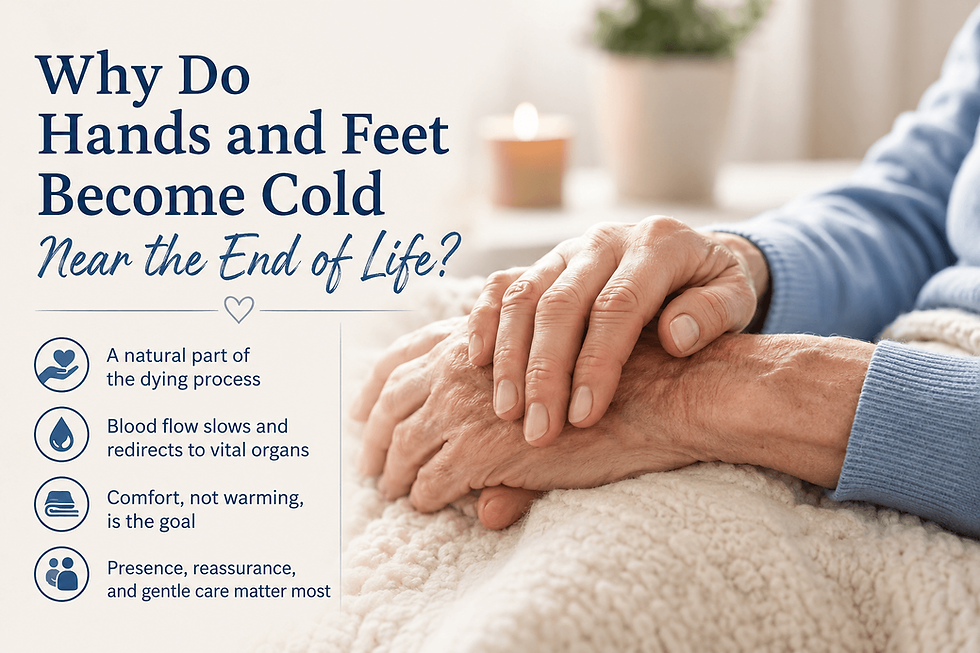
According to the National Institute on Aging, as the body naturally begins shutting down near the end of life, circulation slows and the hands, arms, feet, and legs often become cool to the touch as blood flow is redirected toward vital organs. This is a common and expected part of the dying process and does not necessarily mean a person is uncomfortable.
Watching your loved one's hands or feet become cold can be unsettling, especially if you've never witnessed the dying process before. Many families immediately wonder whether their loved one is suffering, needs another blanket, or if something is wrong. In most cases, cold hands and feet at the end of life are a natural physical change that occurs as the body prepares for death. Understanding why this happens can provide reassurance and help families focus on keeping their loved one comfortable during this time.
Key Takeaways
Cold hands and feet at the end of life are a normal result of decreased circulation.
The body naturally redirects blood flow toward the heart, lungs, and brain.
Cold extremities do not necessarily mean your loved one feels cold or is suffering.
Gentle comfort measures are usually all that is needed.
Your hospice team can explain these changes and ensure your loved one remains comfortable.
Why Cold Hands and Feet at the End of Life Happen
As death approaches, every system in the body gradually begins to slow down. The heart pumps less efficiently, blood pressure decreases, and circulation becomes weaker. Because the body can no longer circulate blood as effectively, it prioritizes sending blood to the organs that are most important for survival.
This means less blood reaches the hands, feet, fingers, and toes, causing them to feel noticeably cooler than the rest of the body. Sometimes the arms and legs also become cool to the touch.
Although this change can be frightening for family members, it is generally considered a normal part of the body's natural dying process.
What Causes Cold Hands and Feet at the End of Life?
Several natural changes contribute to this symptom.
Decreased Circulation
As the heart weakens, less blood is pumped throughout the body. The hands and feet are the first areas where reduced circulation becomes noticeable.
Lower Blood Pressure
Blood pressure often declines during the final days or hours of life. Lower blood pressure means less warm blood reaches the body's extremities.
Blood Is Redirected to Vital Organs
The body naturally conserves energy by sending blood to essential organs such as the heart, lungs, and brain instead of the skin and limbs.
Reduced Heat Production
As metabolism slows, the body produces less heat overall, making the hands and feet feel cooler than usual.
Can Cold Hands and Feet at the End of Life Predict When Death Will Occur?
Cold hands and feet are considered one of several common signs that someone may be approaching the end of life, but they cannot predict exactly when death will occur.
Some people develop cold extremities several days before death, while others experience this change only during their final hours. Every person's journey is unique.
Healthcare providers evaluate many changes together, including:
Increased sleeping
Less interest in food and fluids
Changes in breathing
Increased weakness
Reduced responsiveness
Changes in skin color
No single symptom can accurately determine how much time someone has remaining.
How Can You Keep Someone Comfortable with Cold Hands and Feet at the End of Life?
The goal is comfort—not restoring normal circulation.
Simple ways to help include:
Covering them with lightweight blankets
Placing soft socks on their feet if tolerated
Keeping the room at a comfortable temperature
Repositioning them regularly according to hospice recommendations
Holding their hand and providing reassurance
Avoid using heating pads, electric blankets, or hot water bottles. Fragile skin can burn easily, and many patients have reduced sensation, making burns more likely.
Does Cold Hands and Feet at the End of Life Mean Someone Feels Cold?
Not necessarily.
Even though their hands and feet may feel cold to you, many people nearing the end of life do not complain about feeling cold.
Changes in circulation, awareness, and consciousness often affect how temperature is perceived. If your loved one appears comfortable and is resting peacefully, they may not need additional warming beyond light blankets.
If they tell you they feel cold, providing another blanket or adjusting the room temperature can help improve comfort.
What Other Changes Often Occur Alongside Cold Hands and Feet at the End of Life?
Cold extremities frequently occur alongside other normal physical changes, including:
Sleeping much more than usual
Eating and drinking less
Changes in breathing patterns
Increased fatigue
Mottled or blotchy skin
Less conversation
Longer periods of sleeping or unresponsiveness
These changes often happen gradually as the body naturally slows down.
When Should You Contact Hospice?
If your loved one is already receiving hospice care, notify your hospice nurse whenever you notice new physical changes. Although cold hands and feet are expected near the end of life, your hospice team can explain what is happening, answer your questions, and ensure your loved one remains comfortable.
If your loved one is not currently enrolled in hospice but is showing multiple signs of decline—including increased sleeping, decreased eating, worsening weakness, or frequent hospitalizations—it may be appropriate to ask their healthcare provider whether a hospice evaluation is right for them.
Final Thoughts
Seeing cold hands and feet at the end of life can be emotional for families, but it is usually a natural part of the body's final transition. As circulation slows, blood flow is redirected toward the organs that need it most, causing the hands and feet to become cool.
Knowing what to expect can help ease fear and uncertainty. Rather than worrying about the temperature of their hands or feet, focus on providing comfort, speaking softly, holding their hand, and simply being present. Those moments often mean far more than any medical intervention.
Frequently Asked Questions
Why do hands and feet become cold near the end of life?
As circulation slows during the dying process, the body redirects blood flow toward vital organs like the heart and brain. This causes the hands and feet to become cool or cold to the touch.
Do cold hands and feet mean death is near?
Cold hands and feet are one of several common signs that a person may be approaching the end of life, but they cannot predict exactly when death will occur.
Does having cold hands and feet mean my loved one is suffering?
Usually not. Many people do not feel discomfort from cold hands and feet during the dying process. Hospice teams focus on keeping patients comfortable if symptoms develop.
Should I use a heating pad if my loved one's hands and feet are cold?
No. Heating pads and electric blankets can burn fragile skin. Soft blankets, socks, and a comfortably warm room are safer ways to provide comfort.
Can hospice help if my loved one's hands and feet become cold?
Yes. Hospice nurses regularly educate families about normal end-of-life changes, including cold hands and feet, and ensure patients remain as comfortable as possible.
Learn More About End-of-Life
If you're caring for someone with a serious illness, these Oasis Hospice Care resources may also be helpful:
Looking for more helpful information? Explore our Hospice Education, Health & Disease Education, Community Resources, and Emotional Wellness & Support categories for compassionate guidance, practical resources, emotional support and answers to common questions about hospice care, caregiving, chronic illness, and the end-of-life journey.

Why Families Trust Oasis Hospice:
Oasis Hospice has been recognized as one of the highest-rated hospice providers based on Medicare.gov quality ratings. Families searching for compassionate, high-quality hospice support can compare hospice providers and learn more through Medicare.gov Care Compare. For additional education, caregiving guidance, and end-of-life support resources, families may also find helpful information through the Hospice Foundation of America.
From Houston to Huntsville, Houston to Livingston, and the many communities in between, Oasis Hospice is committed to providing compassionate hospice care, guidance, and support for patients and families during life’s most difficult moments. If you or a loved one have questions about hospice support services, Oasis Hospice is here to help families throughout Southeast Texas navigate care with compassion, dignity, and guidance every step of the way. To learn more about our hospice services and family support resources, please visit our website below.
Explore more hospice resources, support, and articles here:


Comments